
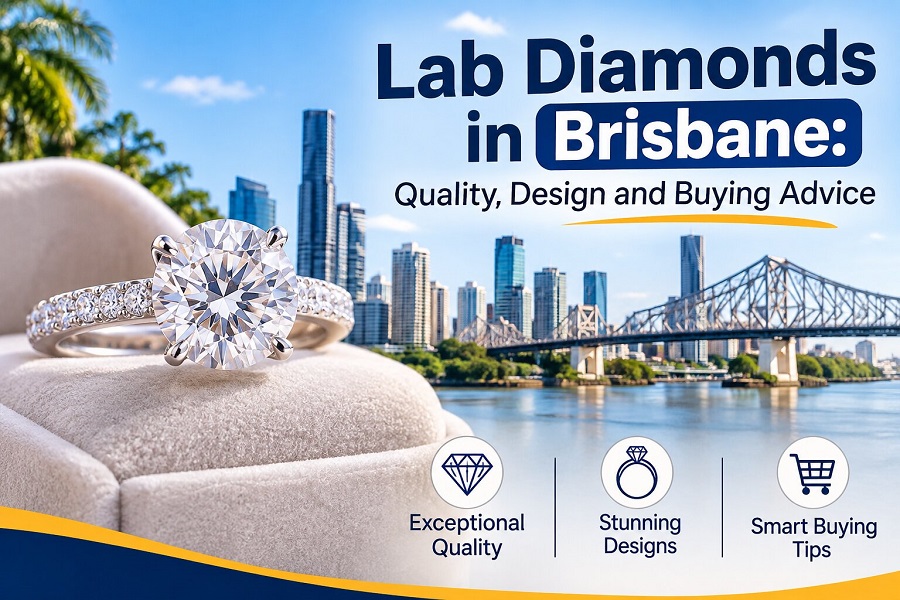
Lab-grown diamonds give jewellery buyers more flexibility when selecting a diamond’s size, shape and setting. For people shopping in Brisbane, the main decision is often not simply choosing between a natural and a laboratory-grown stone. It is deciding which diamond specifications, jewellery design and purchasing arrangements make sense for their needs..
Lab diamonds Brisbane have the same basic chemical composition and crystal structure as natural diamonds. They are made using controlled processes, mainly Chemical Vapour Deposition (CVD) and High Pressure High Temperature (HPHT). Their origin differs, but both types of diamond can be assessed using the same established grading criteria.
Understanding those details makes it easier to compare jewellery and avoid paying for features that may not matter to you.
Diamond Grading Matters More Than Carat Weight Alone
A larger diamond can attract attention, but carat weight does not tell the whole story. Two diamonds with the same weight can look quite different because of their cut quality, proportions, colour and clarity.
Cut deserves particular attention. It affects how effectively a diamond reflects light, giving it brightness and sparkle. A poorly proportioned stone may appear less lively even if its carat weight is higher.
Colour and clarity also influence the appearance and price. For example, a small difference in colour grade may be difficult to notice once a diamond is mounted in a ring. Similarly, some inclusions are less visible without magnification.
Buyers should compare actual diamond images and grading reports rather than relying on specifications alone.
Choosing a Shape That Works With the Jewellery Design
Diamond shape changes the overall appearance of an engagement ring, pendant or pair of earrings. Round brilliant diamonds are popular for their light performance, while oval cuts create an elongated appearance that can make a stone look larger from above.
Other shapes offer different design possibilities:
- Emerald cut: Its long, straight facets create a clear, mirror-like appearance. Clarity deserves extra attention because inclusions can be easier to see.
- Pear shape: This style combines a rounded end with a pointed tip. A protective setting can help guard the point against damage.
- Princess cut: Its square outline suits modern designs, although the corners need suitable protection.
- Cushion cut: Rounded corners and larger facets give this shape a softer appearance.
The setting should suit the chosen shape. A jeweller can explain how prong placement, stone height and band width affect both appearance and everyday comfort.
Matching the Setting to Everyday Wear
An engagement ring needs to work with the owner’s daily routine. Someone who regularly uses their hands for physical tasks may prefer a lower-profile setting rather than a tall design with exposed prongs.
A solitaire setting keeps attention on one centre stone and is relatively straightforward to maintain. Halo settings add smaller diamonds around the main stone, creating a fuller appearance. Pavé bands introduce additional sparkle but may require more attention during cleaning and inspection.
Bezel settings surround the diamond with a metal rim. This offers extra protection around the stone’s edge and creates a clean outline.
The right choice depends on the diamond shape, preferred appearance and how the jewellery will be worn.
Platinum and Gold Offer Different Practical Advantages
The metal affects the colour, weight, maintenance and overall appearance of a piece.
Platinum has a naturally white appearance and is valued for its strength. White gold offers a similar look but commonly uses rhodium plating to maintain its bright surface. Yellow gold creates a warmer contrast against a colourless diamond, while rose gold has a pink tone produced by its copper content.
For engagement rings, the band thickness and construction deserve attention. A very thin band may look delicate, but its long-term suitability depends on the metal, design and craftsmanship.
Buyers planning to wear a wedding band alongside an engagement ring should also check how the two rings fit together. A high-set diamond may leave a visible gap, while a curved or shaped wedding band can create a closer fit.
What to Check Before Buying Online in Brisbane
Online jewellery shopping gives Australian buyers access to different diamond shapes, settings and custom designs. However, photographs alone do not always show the full details of a finished piece.
Before placing an order, check:
- Grading documentation: Ask for a diamond grading report from a recognised independent gemological laboratory, such as IGI or GIA.
- Stone details: Confirm the carat weight, cut, colour and clarity of the exact diamond being offered.
- Actual appearance: Request clear photographs or video of the individual stone, preferably under different lighting conditions.
- Ring measurements: Confirm the ring size, band width and setting height.
- Delivery arrangements: Check delivery times, insurance, tracking and what happens if the item arrives damaged.
- After-sales service: Understand the resizing policy, warranty conditions, cleaning options and repair arrangements.
Australian buyers should also check the seller’s return policy before ordering customised jewellery. Personalised pieces may have different return conditions from standard designs.
For additional information on lab made diamonds designs and diamond choices, buyers can refer to lab diamonds Brisbane when comparing options for their jewellery purchase.
Ask Questions Before Approving a Custom Design
Custom jewellery allows buyers to select the centre diamond, metal, setting and smaller design details. However, a sketch or digital rendering does not always show how a finished ring will look or feel.
Ask the jeweller for the final measurements, including the centre stone dimensions and band thickness. If the ring includes a hidden halo or pavé detailing, request information about how those smaller stones are secured.
It is also sensible to confirm the total price, production timeframe and any changes that may affect the finished design before approving the order.
A well-chosen lab-grown diamond should suit the intended piece, the wearer’s preferences and the practical demands of everyday use. Clear grading information, suitable craftsmanship and careful attention to ring measurements make the buying decision much easier.